
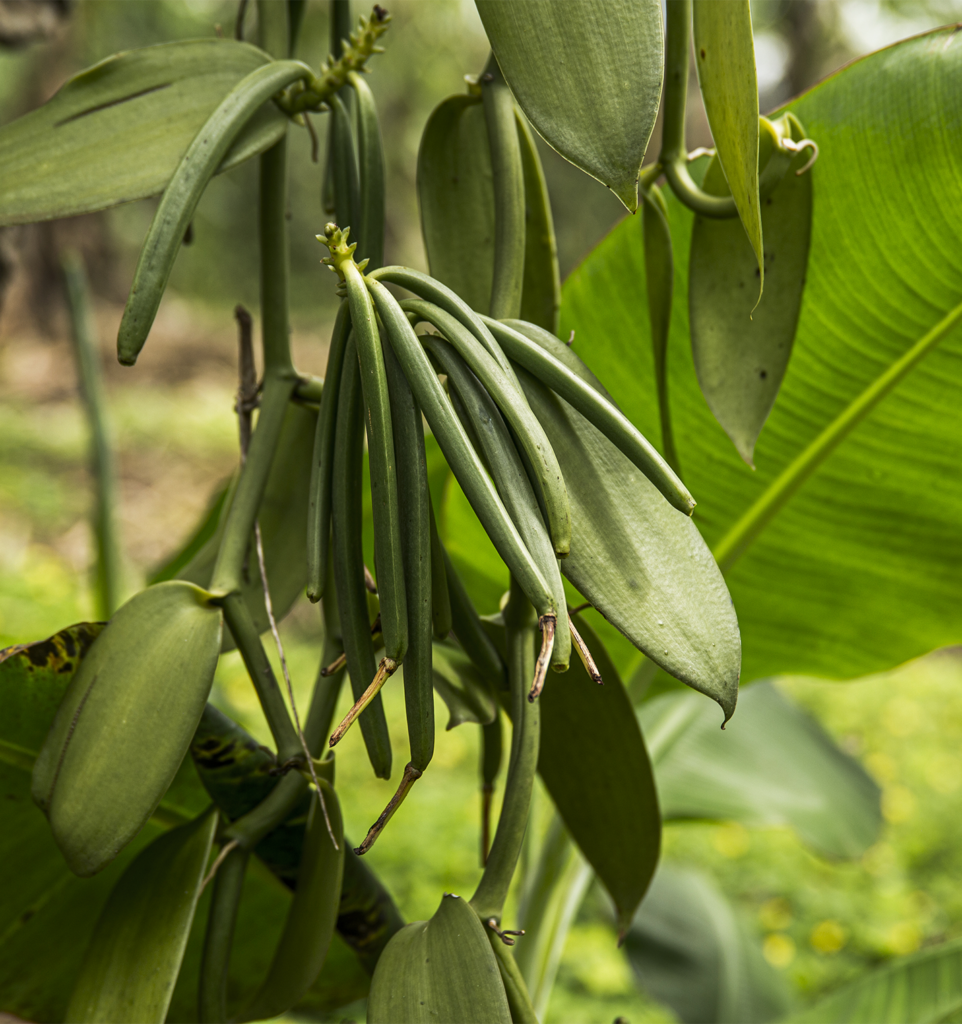
Blog post: Ugandan Vanilla: The Perfect Ecological Crop for Sustainability
When you think about premium vanilla, your mind may go straight to flavor, aroma, and quality. But in Uganda, vanilla is so much more than a world-class ingredient—it’s a crop that works with nature, not against it.
Unlike many other crops, Ugandan vanilla thrives without the use of pesticides, fungicides, or tilling, thereby reducing its environmental impact and making it an inherently eco-friendly choice. Farmers cultivate it in mixed-shade ecosystems, where vanilla vines grow alongside coffee, bananas, and native trees. This natural integration fosters biodiversity, boosts pollinator activity, and helps create a balanced microclimate for healthier, more resilient plants.
A Crop That Heals the Land
Ugandan vanilla’s cultivation is rooted in zero-tillage farming, a practice that leaves the soil undisturbed. This not only prevents erosion but also enhances soil structure, retains organic matter, and supports the soil’s natural ability to regenerate over time. As a result, vanilla farming contributes directly to land restoration while maintaining agricultural productivity.
Tree planting is also a central part of Uganda’s vanilla-growing culture. By planting shade trees, farmers improve soil fertility and create a sustainable habitat that benefits the vanilla vines and the wider ecosystem.
Why This Matters
In today’s market, brands are increasingly being called on to prove the environmental responsibility of their sourcing. Ugandan vanilla provides a compelling story:
1. Low-input farming means fewer chemicals in the supply chain;
2. Agroforestry integration ensures long-term land viability;
3. Climate resilience safeguards consistent yields, even amid global weather disruptions;
4. Community-driven practices strengthen rural economies and empower farmers—many of them women—who are at the heart of this sustainable supply.
Leading by Example in the Vanilla Industry
The global vanilla sector has long faced challenges: market volatility, climate change, and environmental degradation among them. Uganda is addressing these issues head-on by building a supply chain that prioritizes traceability, sustainability, and farmer well-being. Initiatives such as farmer training in eco-friendly methods, local capacity-building, and value addition at origin are helping create a more transparent and ethical vanilla industry.
An Ingredient Your Customers Will Love and Trust
When you choose Ugandan vanilla, you’re not just sourcing a premium flavor. You’re investing in an origin that supports soil health, climate stability, and rural livelihoods, all while delivering a bold, creamy, and aromatic vanilla profile loved by chefs, flavorists, and product developers worldwide.
Explore Our Resources
We’ve built a dedicated Resources Hub to help you tell this sustainability story to your team, clients, and customers. Inside, you’ll find:
– A comprehensive presentation deck introducing Ugandan vanilla;
– A detailed sell sheet with product specifications;
– Promotional videos for marketing;
– Case studies and supplier connections.
Download your resources here: Vanilla from Uganda Resources
Ugandan vanilla is more than an ingredient; it’s a commitment to a sustainable future. Let’s share that story together.